
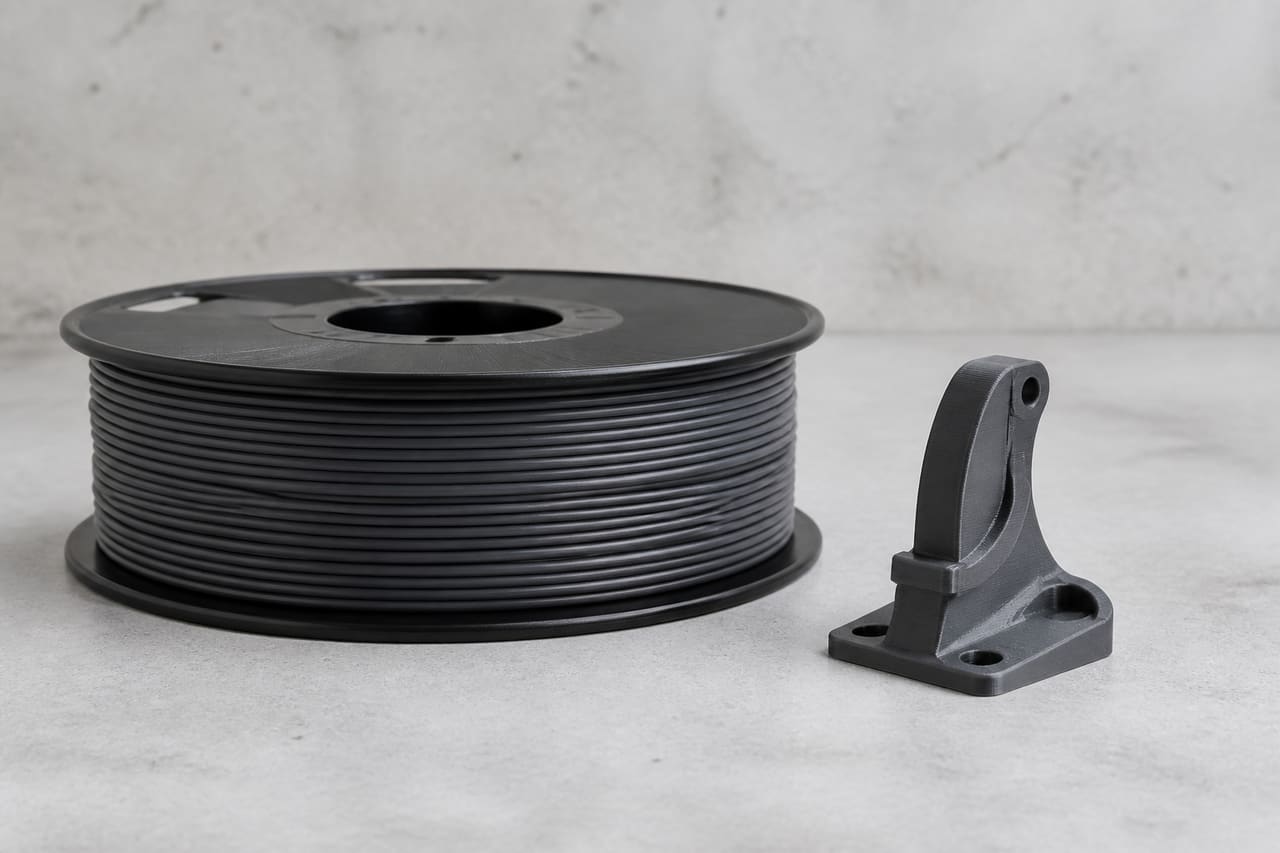
In FDM catalogs, PLA+ (PLA Plus) is the classic “volume upgrade” SKU: it keeps the easy printing, low odor, and classroom-friendly behavior of standard PLA, while formulation toughening improves impact resistance and reduces brittle snap-fits and drop failures. For distributors, print farms, and private-label brands, PLA+ is often the second core SKU after PLA Basic — covering functional prototypes and consumer structures, with fluorescent colors for retail differentiation.
Important: “PLA+” is a commercial name, not a single global standard grade. Factories modify PLA with tougheners and related additives. Buyers should compare impact strength, flexural strength, HDT, diameter tolerance, batch color ΔE, and dry packaging — not the name alone. Qianshuo PLA+ typically targets about 35 kJ/m² impact, 72 MPa flexural strength, and ~58°C HDT, with a 10-color range including fluorescent yellow and orange for prototypes, education kits, and consumer OEM parts.
Versus PLA Basic, PLA+ is “same easy print, more durability.” Basic fits display models, one-off samples, and price-sensitive channels. Once parts need clips, hinges, handheld drop resistance, or light load, Basic brittleness becomes a support risk. PLA+ is friendlier on interlayer toughness and impact for functional prototypes, teaching aids, housings, and remountable structures. If your channel sells both entry and upgrade spools, Basic + PLA+ creates a clear price and value ladder.
Versus PETG, draw a clean boundary. PETG is usually more moisture-tolerant and interlayer-tough for containers, stronger clips, or mild chemical exposure — but the print window, odor, and warping behavior differ from PLA. PLA+ keeps PLA machine habits and learning curves while closing part of the mechanical gap. For higher heat or outdoor UV, step up to ABS / ASA or engineering grades instead of forcing every functional part onto PLA+.
Process notes (desktop FDM reference — follow TDS): nozzle in the usual PLA range with machine-specific tuning; bed about 50–60°C; moderate cooling to protect interlayer bonds; validate mid-to-high speed on your fleet. Fluorescent colors are more sensitive to melt temperature and residence time — lock color and surface on same-lot samples before bulk. Prefer 1.75mm (2.85mm on request) with ±0.03mm diameter control so high-speed flow stays stable.
Colors & OEM: Qianshuo PLA+ covers white, grey, black, purple, blue, orange, red, green, plus fluorescent yellow and orange (~10 colors). Neutrals fit industrial and education SKUs; fluorescents fit toys, event merch, safety cues, and e-commerce hero shots. For private label, start with 3–5 hero colors, then expand seasonal fluorescents to control inventory. Spooled, spool-less, and refill formats plus box/label OEM options support ready-to-shelf programs.
B2B QC checklist before PO: (1) inline laser diameter logs, (2) cross-spool ΔE for the same SKU, (3) vacuum + desiccant packaging and re-dry guidance, (4) TDS / COA / MSDS with shipment, (5) MOQ (typically 50kg) and lead time (samples 3–7 days; bulk often 7–25 days by qty), (6) FOB Foshan pricing and OEM min per color. Write these into your sourcing spec — it beats racing on unit price alone.
Channel mix tip: PLA Basic for volume acquisition, PLA+ for upgrade and light functional margin, Matte / Silk / Wood for cosmetic differentiation, PETG for tougher containers and industrial brackets. One PLA-family ladder covers retail, education, and light OEM — with headroom to sell engineering grades later.
Explore PLA+ at qs3dprinterfilament.com/products/pla/pla-plus and request 1–2 sample spools per color to compare toughness and fluorescent finish. Email evans@qs3dprinterfilament.com or WhatsApp +852 5307 0568 for wholesale and OEM quotes. Qianshuo Foshan source factory — ±0.03mm laser diameter control, TDS / COA / MSDS export docs available.