

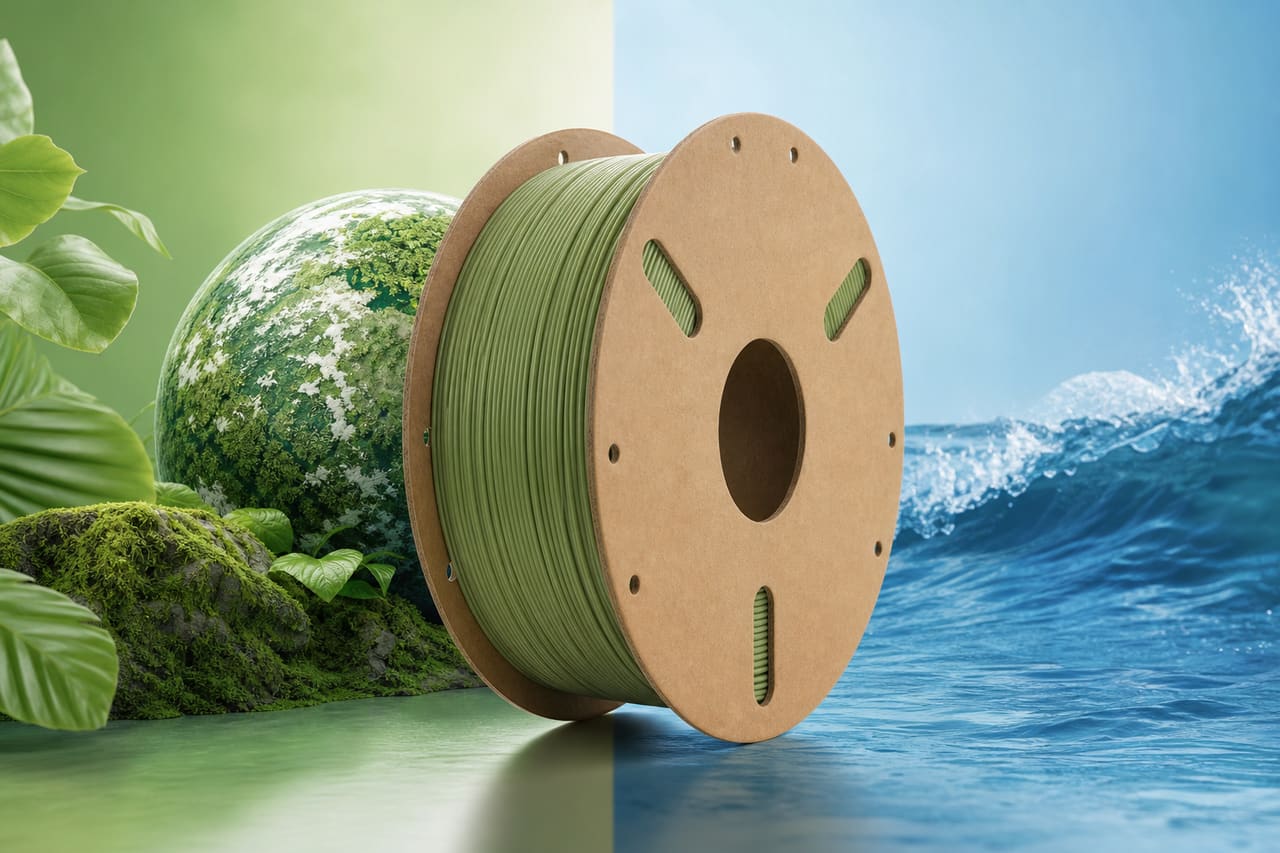
EU PPWR (Packaging and Packaging Waste Regulation), Germany's VerpackG, Nordic plastic taxes, Japan's Plastic Resource Circulation Act, and Korea's resource circulation rules are reshaping global B2B filament procurement. Distributors, sustainable brands, and OEM buyers no longer ask only "does it print well?" — they ask: Is it bio-based? Does it break down in soil, freshwater, or marine environments? Does it create microplastics? Can it pass EPR and green procurement audits? On those questions, the gap between PHA (polyhydroxyalkanoate) and PLA or PETG determines whether your SKU can enter high-regulation markets such as Germany, the Netherlands, Sweden, Japan, and Korea.
PLA (polylactic acid) is often marketed as "biodegradable," but in practice PLA mainly breaks down in industrial composting facilities (~58°C+, controlled humidity). In ambient soil, freshwater, or marine conditions it degrades very slowly, and fragmented particles can persist as microplastics. PETG is a petroleum-based glycol-modified polyester — excellent toughness and moisture tolerance, but not biodegradable and typically classified as conventional plastic in ESG and carbon reporting. By contrast, bio-based PHA filament is 100% bio-based, synthesized via microbial fermentation from renewable carbon, and designed to biodegrade in soil, freshwater, marine, industrial, and home compost environments with zero microplastic residue — the core material difference for eco-conscious channels.
Polyhydroxyalkanoate (PHA) is a natural polyester bacteria store as energy when nutrients exceed growth needs. Commercial PHA filament is optimized for FDM/FFF: print temperature 200–210°C, up to 200–300 mm/s throughput (50–100 mm/s recommended for best surface quality), fast crystallization, minimal stringing. Mechanically: HDT >85°C, tensile strength 16–19 MPa, impact 5–15 kJ/m², elongation at break >50% — balancing sustainability storytelling with manufacturability. Diameter 1.75 mm ±0.05 mm; dry at 65°C for 4–8 h before printing — moisture sensitivity similar to PETG, so factory moisture control is critical for stable B2B supply.